
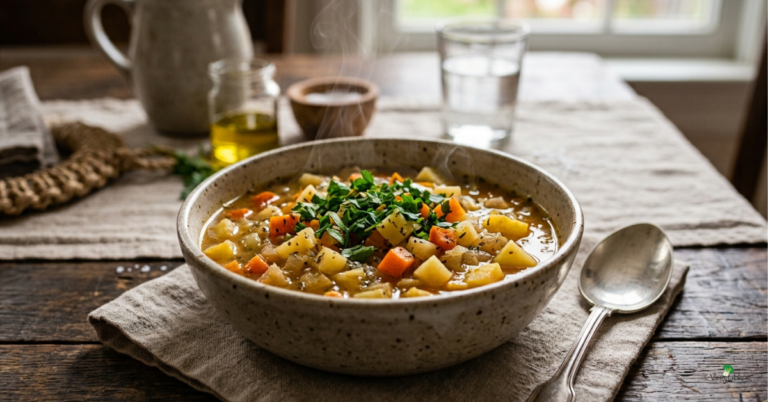
Root vegetable soup is the kind of meal that turns a cold, grey day into something cosy. One pot, a handful of humble vegetables, and you’ve got a bowl that tastes like it simmered all day.
Old-fashioned technique, root vegetable soup ingredients you likely already have, and an approach that lets you make it chunky, creamy, or spicy depending on your mood. Let’s get cooking.
A quick note from our kitchen: this is the soup we make on Sunday afternoons when the week ahead looks busy. It simmers quietly while you get on with other things, and by dinnertime the whole kitchen smells like a vegetable patch. There’s something deeply satisfying about a pot built from odds and ends pulled straight from the crisper drawer.
What Makes This the Best Root Vegetable Soup Recipe
This isn’t just another root vegetable soup recipe. A few things set it apart and make it worth adding to your weekly rotation.
• Budget-friendly: Root vegetables are some of the cheapest produce around, so this pot costs pennies per serving.
• Naturally vegan and gluten-free: No cream, flour, or thickeners needed, just vegetables doing the work.
• Freezer-friendly: Batch it once and stock your freezer with ready-made lunches for weeks.
• Endlessly flexible: Keep it chunky like a stew, blend it silky-smooth, or turn up the spice.
• One pot, minimal fuss: Chop, sauté, simmer, and you’re done. Perfect for busy weeknights.
Root Vegetable Soup Ingredients (You Probably Already Have)
The beauty of this soup is its simplicity. Grab three or four root vegetables, an onion, garlic, and stock, and you’re most of the way there.
The Best Root Vegetables to Use
• Carrots: Sweet, colourful, and the backbone of almost every root vegetable soup recipe.
• Parsnips: Earthy and slightly peppery, they add real depth.
• Swede or rutabaga: Called swede in the UK and rutabaga in North America, it adds a mellow sweetness.
• Potatoes: Help thicken the soup naturally as they cook down.
• Celeriac or turnip: Either brings a fresh, slightly peppery note if you want more variety.
What Counts as a Root Vegetable?
A true root vegetable grows underground, like carrots, parsnips, potatoes, swede, and turnip. Butternut squash and cauliflower aren’t technically root vegetables, but both roast and blend beautifully here, so feel free to fold either into the pot.
Roasted vs. Simmered: Two Ways to Make Root Vegetable Soup
Both methods lead to a delicious bowl. Pick whichever fits your evening.
Roasted Root Vegetable Soup (For Maximum Flavour)
Toss diced vegetables in oil and roast at 220°C (425°F) for 25 to 30 minutes before adding them to the pot. Roasting caramelises the natural sugars, giving the soup a deeper, sweeter flavour.
Simple Stovetop Method (For a Quick Weeknight Soup)
Sauté the vegetables briefly, then simmer everything together in stock until tender. It’s faster, needs only one pot, and still delivers a properly hearty, old-fashioned root vegetable soup.
The Root Vegetable Soup Guide
Once you know this , you can build your own version with whatever root vegetables are in season.
| Component | Options | Amount |
| Base | Onion and garlic, sautéed in oil or butter | 1 onion, 3 cloves garlic |
| Root vegetables | Carrot, parsnip, swede, potato, celeriac | 6–8 cups, diced |
| Liquid | Vegetable stock, chicken stock, or water | 6 cups |
| Texture | Left chunky or blended smooth | your choice |
| Finish | Fresh herbs, cream, croutons, or cheese | to taste |
Old-Fashioned Root Vegetable Soup Recipe
This is the base recipe, simple, comforting, and easy to make your own. Serves 6.
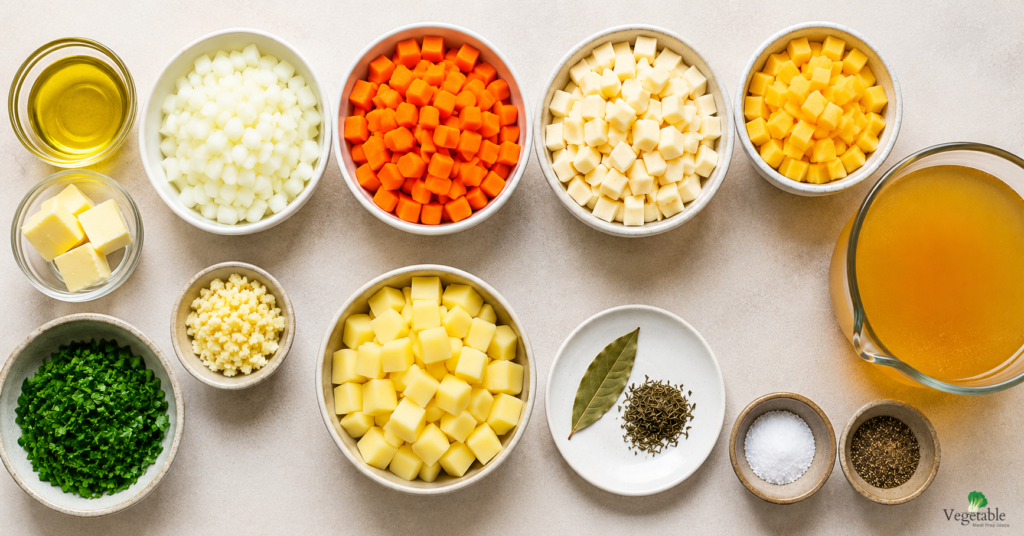
What You’ll Need:
• 2 tbsp olive oil or butter
• 1 large onion, chopped (about 1½ cups)
• 3 garlic cloves, minced
• 2 cups carrots, peeled and diced
• 2 cups parsnips, peeled and diced
• 2 cups swede (rutabaga), peeled and diced
• 2 cups potatoes, peeled and diced
• 6 cups vegetable stock (or chicken stock)
• 1 bay leaf
• 1 tsp dried thyme
• Salt and pepper, to taste
• ¼ cup fresh parsley, chopped, to serve
Instructions
1. Heat the oil in a large pot over medium heat. Add the onion and cook for 5 minutes until soft.
2. Stir in the garlic and cook for 30 seconds until fragrant.
3. Add the carrots, parsnips, swede, and potatoes. Stir to coat in the oil for 2–3 minutes.
4. Pour in the stock, then add the bay leaf and thyme. Bring to a boil, reduce the heat, and simmer for 25–30 minutes until the vegetables are tender.
5. Remove the bay leaf. Mash lightly with a spoon for a chunky texture, or blend until smooth for a creamy soup.
6. Season with salt and pepper, ladle into bowls, and top with fresh parsley.
3 Easy Variations to Try
Once you’ve mastered the base recipe, use these twists to keep things interesting all winter.
Chunky Root Vegetable Soup (Skip the Blender)
Leave the vegetables unblended and stir in ½ cup cooked barley or lentils. This turns your soup into a hearty root vegetable stew that eats like a full meal.
Creamy Roasted Root Vegetable Soup
Roast the vegetables first for extra sweetness, then blend the finished soup until silky-smooth. Stir in a splash of cream or coconut milk for an extra-luxurious finish.
Spicy Root Vegetable Soup (Add Some Heat)
Sauté 1 tsp curry powder or ½ tsp chilli flakes with the onions, and add a thumb of grated ginger. Finish with a swirl of coconut milk to balance the heat.
Root Vegetable Soup Nutrition Facts
Numbers shift depending on your stock and finishing touches, but here’s what one bowl of the base recipe looks like.
| Nutrient | Approximate Amount per Serving* |
| Calories | 180–220 kcal |
| Protein | 4–5 g |
| Carbohydrates | 32–36 g |
| Fat | 5–7 g |
| Fibre | 7–9 g |
*Values are estimates based on typical portions and will vary depending on your stock and finishing touches.
How to Store and Freeze Root Vegetable Soup
• Cool before storing: Let the soup cool to room temperature before sealing it, to keep the fridge or freezer working efficiently.
• Refrigerate for 4–5 days: Store in an airtight container and reheat gently on the stove or in the microwave.
• Freeze for up to 3 months: Portion into freezer-safe containers or bags, leaving room for expansion.
• Thaw overnight: Move frozen soup to the fridge the night before you plan to reheat it for the best texture.
• Thin as needed: The soup thickens as it sits, so add a splash of stock or water when reheating.
Easy Substitutions for Root Vegetable Soup
• No swede on hand? Use extra potato or a small rutabaga instead.
• Want more protein? Stir in cooked chickpeas, lentils, or baked tofu cubes from our Tofu Meal Prep guide.
• Out of parsnips? Butternut squash makes a lovely, sweeter substitute.
• Prefer sweet potato? Swap it in for regular potatoes using tips from our Sweet Potato Lunch Recipes guide.
• No fresh thyme? Dried thyme or a pinch of herbes de Provence both work well.
Frequently Asked Questions
Q.1 What vegetables count as root vegetables?
True root vegetables grow underground and include carrots, parsnips, potatoes, swede, turnip, and celeriac. They’re typically earthy, slightly sweet, and hold up well to long simmering.
Q.2 Can I make root vegetable soup in advance?
Yes. This soup actually tastes better the next day, once the flavours have had time to develop. Make it up to two days ahead and reheat gently before serving.
Q.3 How do I make chunky vs. creamy root vegetable soup?
For a chunky root vegetable soup, simply skip the blending step and mash lightly instead. For a creamy version, blend the cooked soup with an immersion blender or in batches in a countertop blender.
Q.4 Is root vegetable soup vegan and gluten-free?
Yes, when made with vegetable stock and without cream, this soup is naturally vegan and gluten-free, making it easy to serve to a mixed table.
Q.5 Can I add butternut squash or cauliflower to root vegetable soup?
Absolutely. Neither is technically a root vegetable, but both roast and blend beautifully, adding extra sweetness or a milder, creamier note to the pot.
Q.6 How long does root vegetable soup keep in the fridge?
Stored in an airtight container, root vegetable soup keeps well in the fridge for four to five days, and the flavour often improves after the first day.
Q.7 Can I make root vegetable soup in a slow cooker?
Yes. Add all the ingredients except the parsley to your slow cooker and cook on low for 6 to 7 hours or high for 3 to 4 hours. Mash or blend before serving, then stir through the fresh parsley.
Ready to Make Your Own Pot?
Root vegetable soup rewards you for very little effort: chop, sauté, simmer, and let the pot do the rest.
Pick your texture, choose your vegetables, and get a big, warming batch on the stove this week.